

Political violence is becoming too common. It doesn’t matter if it happens against Republicans or Democrats.
Now Ilhan Omar’s attacker learned his fate.
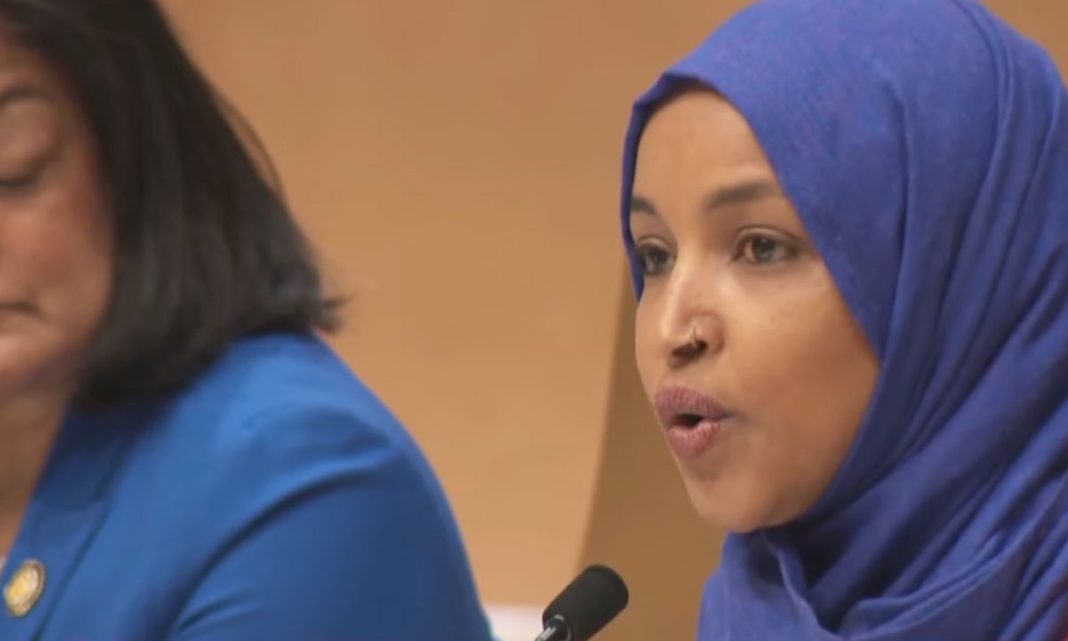
Political violence against elected officials should never be tolerated, regardless of party, and the sentencing this week of the man who assaulted Democratic Rep. Ilhan Omar with a syringe full of apple cider vinegar during a Minneapolis town hall serves as another sobering reminder of just how unstable American political discourse has become. Anthony Kazmierczak, 56, was sentenced Thursday to 14 months in federal prison after pleading guilty to assaulting a U.S. officer.
The attack itself, which occurred on January 27 at the Urban League Twin Cities headquarters in north Minneapolis, was disturbing regardless of one’s views on Omar’s politics. Kazmierczak rose from the audience during the town hall, rushed toward the congresswoman, shouted at her, and sprayed her with a liquid from a syringe that authorities later determined was a mixture of water and apple cider vinegar. Omar was not injured, but the assault visibly startled her, and she reportedly stepped toward Kazmierczak with her fist raised before security personnel tackled him to the ground.
This wasn’t some spontaneous outburst by a man who lost control of his emotions in the heat of the moment. U.S. District Judge Joan N. Ericksen made that point explicitly during sentencing. “This wasn’t a spur of the moment act,” Ericksen said, noting that Kazmierczak had secured tickets to the town hall weeks in advance. Premeditation of this kind, even for an attack that caused no lasting physical harm, is exactly the sort of behavior that ratchets up tension and fear for every elected official trying to do the basic work of meeting constituents.
Court documents paint a picture of a man who planned his actions with disturbing deliberateness. According to the government’s sentencing memo, Kazmierczak had texted at least three people in the days leading up to the attack, indicating he planned to do something involving Omar at the meeting, though he reportedly refused to answer their follow-up questions about what exactly he intended. He also took the additional step of arranging for a neighbor to look after his dog and lining up contact information for a bail bond company — hardly the actions of someone who hadn’t thought through the consequences of what he was about to do.
A search of Kazmierczak’s computer following his arrest reportedly revealed online searches for Omar herself, for apple cider vinegar specifically, and for the potential criminal charges associated with assaulting a public official. That level of advance research undercuts any suggestion this was an impulsive act rather than a calculated decision to confront and assault a sitting member of Congress.
Kazmierczak did offer some contrition during sentencing, telling the court, “I didn’t do this specifically to hurt her.” His attorney, John Fossum, argued that his client was between medications at the time of the incident, resulting in reduced inhibitions, and the sentencing memo noted Kazmierczak had a documented history of alcohol abuse, mental and emotional health struggles, and health complications tied to a 2022 Parkinson’s disease diagnosis. Whatever combination of factors contributed to his state of mind that day, the premeditation documented by prosecutors makes it difficult to dismiss this as a simple lapse in judgment.
Assistant U.S. Attorney Benjamin Bejar didn’t mince words in the government’s sentencing memo, arguing that Kazmierczak’s actions placed both Omar and other town hall attendees in genuine fear of bodily harm — a concern he characterized as “quite reasonable” given the broader climate of political violence that has gripped Minnesota and the country more broadly in recent years. That’s an assessment worth sitting with regardless of political affiliation. When members of Congress can’t hold a routine town hall without facing a premeditated physical assault, something has gone seriously wrong with the state of American political discourse.
It’s also worth noting the specific context surrounding this attack. It occurred during Operation Metro Surge, a period when the deployment of roughly 2,000 immigration officers throughout the Twin Cities had already generated significant public tension, angry protests, and arrests, with two U.S. citizens tragically k*lled during related law enforcement activity around that same period. That volatile backdrop makes an already disturbing act of premeditated political violence even more concerning, regardless of which side of the immigration debate one falls on.
Kazmierczak received the full 14-month sentence that federal prosecutors had recommended, along with three years of supervised release that explicitly bars any contact with Omar going forward. U.S. marshals escorted him from the courtroom following the sentencing. Given the premeditated nature of the attack and the genuine fear it generated among those present, that sentence reflects an appropriate level of accountability for behavior that simply cannot be normalized in American public life.
This case fits into a broader and deeply troubling pattern of escalating political violence in America that has touched officials and public figures across the entire political spectrum in recent years. Whether it’s threats against Republican lawmakers, an assassination attempt against a conservative activist, or an assault against a sitting Democratic congresswoman during a town hall, the underlying problem remains the same: too many Americans have concluded that violence, or the threat of it, is an acceptable way to express political disagreement. It isn’t, and it never should be, regardless of which party or which official happens to be the target.
Elected officials of every political stripe should be able to hold public town halls, meet with constituents, and engage in the basic democratic exercise of representative government without fearing physical assault. Kazmierczak’s 14-month sentence sends an appropriate message that premeditated attacks on members of Congress carry real legal consequences. But the sentence alone won’t fix the underlying climate of hostility and distrust that continues to produce these incidents with troubling regularity. That’s a challenge for leaders and citizens across the political spectrum to take seriously, rather than treating political violence as a problem that only exists when it happens to the other side.
