
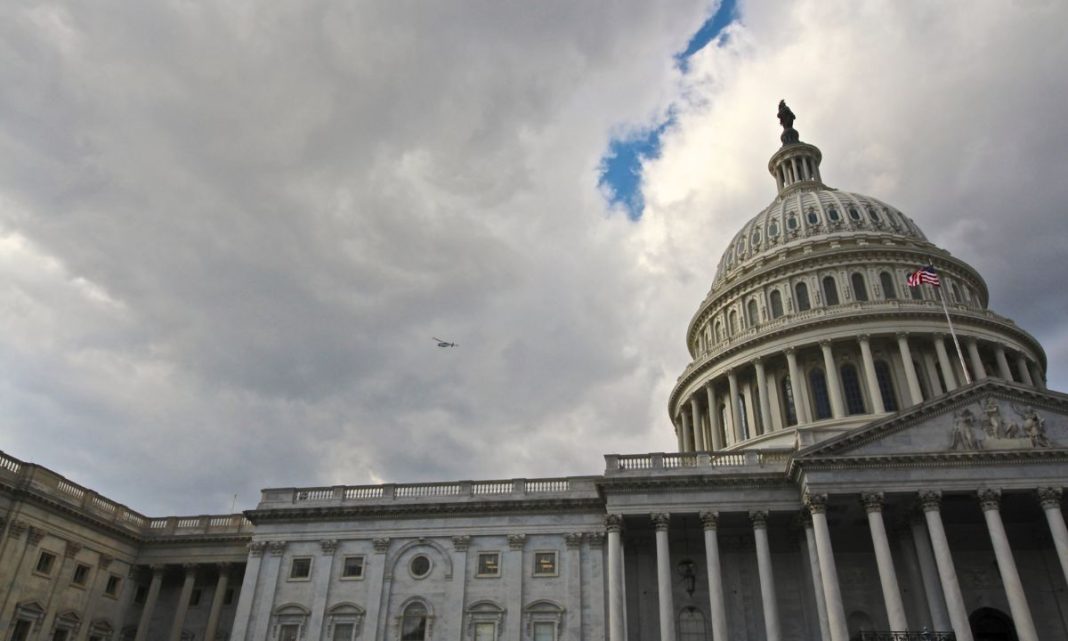

The House has taken a significant step toward bolstering America’s economic strength and industrial independence by passing legislation to ramp up domestic production of critical minerals—essential materials that power everything from electric vehicles and renewable energy tech to advanced defense systems—reducing costly and risky dependence on foreign suppliers.
House Passes Critical Mineral Dominance Act
On February 4, 2026, the House approved H.R. 4090, the Critical Mineral Dominance Act, by a vote of 224-195, with 10 Democrats crossing party lines to support the measure alongside Republicans.
Introduced by Rep. Pete Stauber (R-Minn.), chair of the Natural Resources Subcommittee on Energy and Mineral Resources, the bill codifies key provisions from several of President Trump’s executive orders aimed at boosting domestic mining and processing of hard-rock minerals, including lithium, copper, nickel, and rare earth elements.
These minerals are foundational to U.S. manufacturing, energy transition, and national security applications in cellphones, hybrid engines, medical devices, lasers, and high-tech military systems.
The legislation directs the Department of the Interior and Department of Agriculture to accelerate mineral production on federal lands by identifying ready-to-approve projects, providing Congress with lists of high-potential mining sites, and removing bureaucratic barriers that have long hindered development.
It emphasizes responsible practices, explicitly stating that no project can bypass core environmental laws like the National Environmental Policy Act, Clean Air Act, Clean Water Act, or Endangered Species Act.
Emphasis on Economic and Security Benefits
Rep. Stauber highlighted the bill’s focus on American competitiveness, stating: “There is no reason for the United States to be dependent on other countries, including foreign adversarial nations, for our critical mineral future. Nobody does it better than the United States.”
He added: “This bill is a strong signal from Congress to the executive branch that we need to get serious about our critical mineral strategy and take necessary steps to win once again.”
By streamlining permitting and prioritizing domestic resources, the measure supports job creation in mining communities, strengthens supply chains for U.S. industries, and enhances economic resilience.
This aligns with broader administration efforts, including Project Vault—a strategic stockpile initiative—and diplomatic pushes for allied trading blocs to counter market dominance by foreign powers.
Opposition and Path Forward
Critics, including Rep. Jared Huffman (D-Calif.), labeled the bill a “corporate giveaway” and raised concerns about potential environmental impacts, while groups like the National Parks Conservation Association argued it falls short on addressing mining oversight on public lands.
Despite these objections, the bipartisan support in the House underscores growing recognition of the need to revitalize U.S. mineral production for long-term economic advantages.
The bill now heads to the Senate, where further action could solidify these gains and help position the American economy as a global leader in critical minerals, fostering innovation, manufacturing growth, and reduced vulnerabilities in key sectors.
