
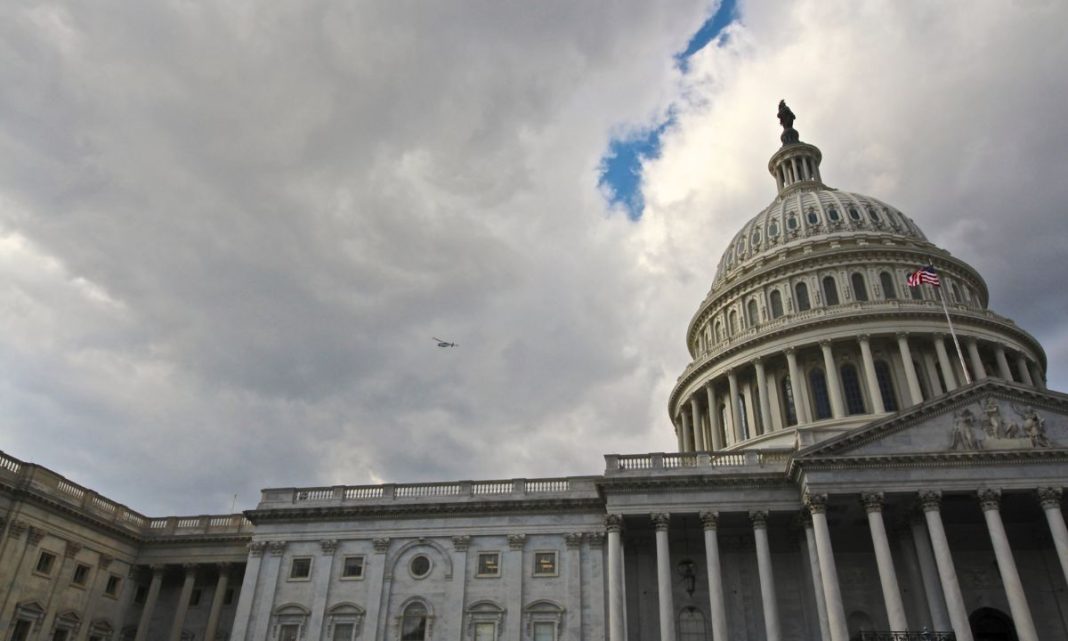

Massie Revives Push to Ditch NATO as Cold War Relic, Echoing Trump’s Fair-Share Demands
As one of NATO’s charter members since its 1949 founding, the United States has long anchored the transatlantic alliance against Soviet—and later Russian—threats. But Rep. Thomas Massie (R-Ky.), a vocal fiscal hawk and libertarian-leaning voice in the GOP, is doubling down on a long-shot bid to pull America out, arguing the bloc has outlived its purpose and drains resources better spent fortifying U.S. borders and capabilities.
“We Should Withdraw from NATO and Use That Money to Defend Our Own Country”
Massie introduced the NATO Act (H.R. 6508) on Wednesday, a measure that would compel the president to invoke Article 13 of the North Atlantic Treaty and formally notify allies of a U.S. exit.
Co-sponsored by Rep. Anna Paulina Luna (R-Fla.), the bill declares NATO’s original mission—to counter Soviet aggression—”no longer aligns with current U.S. national security interests,” given the USSR’s 1991 collapse and Europe’s robust economies and militaries. It would also slam the door on U.S. taxpayer dollars flowing to NATO’s civil and military budgets or its Security Investment Program for gear procurement.
“NATO is a Cold War relic,” Massie posted on X, capturing the bill’s core pitch. “We should withdraw from NATO and use that money to defend our own country, not socialist countries.”
He hammered the costs: trillions squandered since the Soviet fall, plus the ever-present drag of potential U.S. entanglement in distant conflicts. “Our Constitution did not authorize permanent foreign entanglements, something our Founding Fathers explicitly warned us against,” Massie added. “America should not be the world’s security blanket—especially when wealthy countries refuse to pay for their own defense.”
A Senate companion from Sen. Mike Lee (R-Utah) mirrors the push, though both face steep odds in a Congress wary of upending alliances amid Russia’s Ukraine war and China’s Pacific ambitions. Massie’s move taps a growing GOP undercurrent skeptical of endless commitments, amplified by President Trump’s relentless drumbeat for burden-sharing.
Trump’s Pressure Pays Off: Allies Hike Spending Targets to 5% of GDP by 2035
Massie’s timing couldn’t be sharper—or more ironic—coming right after Trump’s hardball diplomacy bore fruit at the June 2025 NATO Summit in The Hague. There, the 32-nation bloc committed to ramping defense outlays to 5% of GDP by 2035, with at least 3.5% earmarked for core military needs and 1.5% for security-linked infrastructure like cyber defenses and resilient grids.
Trump, who has long branded freeloaders among allies, hailed the pledge as a “rebalancing” that puts “more Europe in it,” crediting his administration’s leverage for the leap from the old 2% guideline.
The deal, sealed despite grumbles from holdouts like Spain (which carved out a 2.1% opt-out for its capabilities), requires annual progress reports and a 2029 review—ensuring accountability Trump demanded.
European Allies and Canada have already surged spending from 1.43% of combined GDP in 2014 to over 2% in 2024, funneling more than $485 billion (in 2021 dollars) into defenses last year alone. Trump’s envoy work, including side deals at the summit, helped lock in the hikes, proving his “America First” approach can extract concessions without outright withdrawal.
NDAA Passage Locks in Troop Floors, But Trump’s Signature Looms Over NATO Strings
The NATO Act dropped the same day the House green-lit the $900 billion National Defense Authorization Act (NDAA) for fiscal 2026, a bipartisan behemoth clocking in at over 3,000 pages that sailed through on a 312-112 vote. Packed with Trump’s priorities—like a 3.8% troop pay bump, $162 billion for procurement, $146 billion for R&D, and full funding for border security ops—the bill also trims $1.6 billion from climate initiatives and axes DEI programs to refocus on “lethality.”
Yet it throws up hurdles for any NATO pullback: The Pentagon can’t dip active-duty forces in Europe below 76,000 for more than 45 days without congressional certification that it’s in America’s best interest—and after huddling with allies. This clause, a nod to bipartisan alliance hawks, underscores the uphill battle Massie faces, even as it nods to Trump’s dealmaking ethos by tying drawdowns to consultations.
The Senate’s poised to rubber-stamp the NDAA next week, clearing the path for Trump’s pen—his first on a major defense package since reclaiming the Oval Office. While Massie’s exit gambit spotlights GOP fractures on forever wars, the spending surge and troop safeguards suggest Trump’s strategy—squeeze for fairness, then fortify—may keep the U.S. in the fold, but on sterner terms.
Should the United States withdraw from NATO? Let us know what you think by posting in the comments section!

Also get us out of the UN. Both the UN and NATO are worthless organizations that are only fleecing America for evil purposes. The UN is satanic, and NATO is knocking on that same door.
Agreed. Both the UN and NATO are nothing more than cold war holdovers. EU countries won’t even pay to protect themselves without direct pressure. The UN sucks US dollars while siding with 3rd world nations that hate us and wouldn’t lift a finger to help us.
Yes, absolutely we should withdraw. We should also withdraw from the UN
With Russian and Chinese potential aggression, our continued support of nato is critical. However, the UN no longer serves its original purpose, and no longer deserves our support.
What’s cooking? If you want Jili games, aaajili77 might be your spot. That’s what I mainly go for. Fast withdrawals here. Worth checking for yourself here aaajili77.
Hey everyone, just wanted to say I’ve been checking out arinaplusreward and it’s got some interesting stuff. Definitely worth a look if you’re into this kind of thing. Check it out here: arinaplusreward
Casinomx77, another contender enters the ring! The game selection looks promising. Quick payouts are a must. Anyone know about their withdrawal process? Start winning at casinomx77
The me88app is actually pretty slick. Works well on mobile and I haven’t had any issues. Easy to make deposits and withdrawals, which is key. Check it if you are on the go. me88app .com
Been lurking on KU19 .net for a while now. Finally decided to throw down some cash. Hope I don’t regret it! Wish me luck and try it for yourself! ku19 .net
Thinking about trying jogar blaze tonight. Is it worth the hype? Maybe I’ll win some money for a picanha. Fingers crossed! jogar blaze
It’s beyond time for the USA to leave NATO!
Yes, many of Americans agree. We have spent Trillions since 1949 and now Europe is successful and prosperous so there is no doubt they can defend themselves. The UK and France has nuclear capabiulities to counter any threat. Italy has been bolstering and enlarging their military. The wonderful Polish nation has done an excellent job of fortifications for their nation as well. President Washington warned us over 225 years ago to stay clear of foreign entanglements when not in the interest of the US. NATO is not in the US interest.