
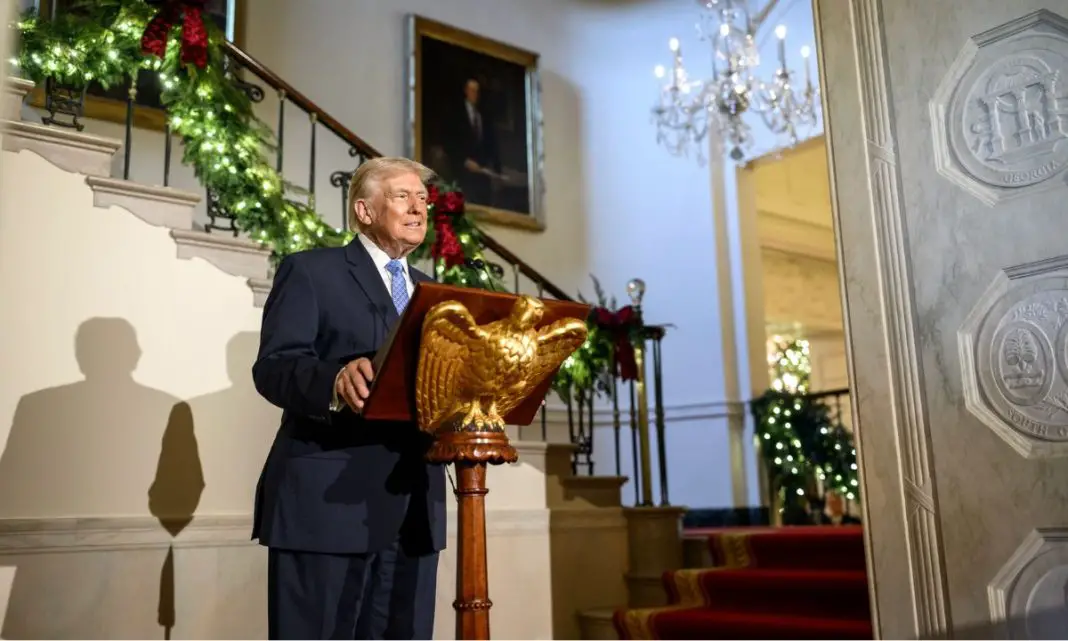

Trump Tees Up Fed Overhaul: Early 2026 Pick to Turbocharge Rate Cuts and Boost Blue-Collar Hiring
President Donald Trump’s quest to revamp the Federal Reserve gained steam Tuesday, as he revealed plans to unveil his successor to Chair Jerome Powell in early 2026—a move poised to install a rate-cutting dynamo who’ll prioritize American workers over Wall Street’s endless inflation excuses, amid a job market that’s cooled to an average of just 29,000 monthly gains since summer and forced the Fed to slash rates twice this year to avert deeper hiring woes.
Powell’s Exit: From ‘Stubborn Ox’ to Open Door for Worker-First Monetary Policy
With Powell’s term wrapping in May 2026, Trump didn’t mince words on his impatience with the holdout holdover from his first term, who’s dragged his feet on deeper cuts despite inflation dipping to 2.4% in October—levels that have squeezed working families’ budgets on groceries and gas while offshoring jobs to cheap foreign labor. “We’ll be announcing somebody probably early next year for the new chairman of the Fed,” Trump declared at a Cabinet meeting, narrowing a list of 10 contenders to a single frontrunner after Treasury Secretary Scott Bessent’s vetting process.
“We have a guy that’s just a stubborn ox. He probably doesn’t like your president, your favorite president,” Trump quipped of Powell, whose reluctance has kept borrowing costs elevated even as the Fed eyes a third consecutive quarter-point trim at its December 9-10 gathering to counter sluggish payrolls and rising layoff risks from AI-driven efficiencies and tariff re-shoring pains.
Betting markets peg White House economic guru Kevin Hassett as the odds-on favorite, with his pro-growth blueprint—echoing Trump’s 2017 tax cuts that supercharged manufacturing hires—edging out Fed insiders Christopher Waller and Michelle Bowman, ex-Governor Kevin Warsh, and BlackRock’s Rick Rieder.
“I think we probably looked at 10 and we have it down to one,” Trump teased, batting away name-drops with a firm “No” that sparked Cabinet chuckles.
Trump’s initial lean? Bessent himself, but the tariff architect demurred to focus on factory incentives. “I talked to Scott about taking the job, but he doesn’t want it,” the president shared, underscoring a search laser-focused on candidates who’ll wield the Fed’s tools to fuel domestic job creation over propping up globalist supply chains that undercut U.S. wages.
Dismissing Dem ‘Affordability’ Con: Trump’s Tax Cuts and Tariffs to Deliver Real Wage Wins for Workers
Trump brushed off Democratic finger-wagging on living costs as political theater, insisting his inherited 9.1% inflation spike—fueled by Biden’s spending sprees and energy handcuffs—has been tamed without sacrificing American livelihoods. “The word ‘affordability’ is a con job by the Democrats,” he fired back. “Affordability. They just say the word. It doesn’t mean anything to anybody.”
With unemployment ticking to 4.3% amid downward revisions slashing 911,000 jobs from prior tallies, Trump’s blueprint—slashing taxes on tips, overtime, and Social Security via the One Big Beautiful Bill—promises bigger refunds and wage hikes for the heartland heroes keeping factories humming.
Bessent amplified the optimism, spotlighting how deregulation and capex surges will spawn blue-collar opportunities nationwide. “The best is yet to come,” he assured, projecting tariff-fueled investments that could add 500,000 manufacturing roles by mid-2026, per Labor Department models.
Yet the crown jewel? Trump’s tariff windfall, already raking in $35.9 billion since October, set to fund a $2,000 “dividend” for everyday earners—direct cash back to families hammered by offshoring, not corporate bailouts.
“The money we’re taking in is so great, it’s so enormous, that you’re not going to have income tax to pay,” Trump boasted, framing duties as a shield for U.S. steelworkers and autoworkers against Beijing’s dumping.
That bounty faces a Supreme Court showdown, where justices probed Trump’s invocation of the 1977 IEEPA for blanket levies—ruling against which could unwind $3 trillion in economic gains and force refunds to importers over workers, per administration estimates.
Undeterred, Trump’s team eyes fallback statutes like Section 301 to keep the pressure on, ensuring tariffs continue repatriating jobs from China and Mexico— a strategy that’s already lured $200 billion in factory pledges since January.
For American workers sidelined by decades of NAFTA-style betrayals, this Fed pivot and trade toughness signal a long-overdue reckoning: prosperity rebuilt on Main Street, not Manhattan boardrooms.
Who do you want to take over for Jerome Powell? Let us know by commenting down below!

Hey guys, just wanted to say KU19NET is my new go-to! Seriously, the games are popping and the wins feel oh-so-good. Give ku19net a try, you won’t regret it!
Interesting analysis! Seeing platforms like ph777 login slot download really shift the focus to player experience – crucial for sustained engagement. It’s not just about games, but accessibility & security too! Great points raised here.
1888v It’s simple, direct, and has a clear focus. Its a web where you can spend time with a simple yet entertaining interface. Enjoy your time and relax in 1888v
77win, heard good things. Giving it a shot tonight! Trying out some of the live casino games. Wish me luck, fellas! Let me know if you have any tips!. 77win